Thursday, May 15, 2008

C.S. Lewis on Writing

In honor of the opening of Prince Caspian tomorrow night - which I desperately want to see, but will probably have to wait - here are a few quotes from C.S. Lewis, one of my favorite writers. Great advice from a truly brilliant mind.

Don't use words too big for the subject. Don't say 'infinitely' when you mean 'very'; otherwise you'll have no word left when you want to talk about something really infinite.

Even in literature and art, no man who bothers about originality will ever be original: whereas if you simply try to tell the truth (without caring twopence how often it has been told before) you will, nine times out of ten, become original without ever having noticed it.

Thursday, May 1, 2008

One Amazing Author


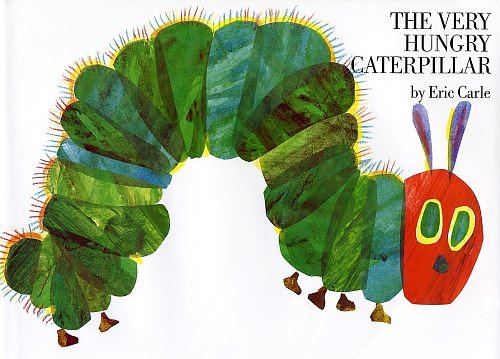
Eric Carle is more than just a picture book author/illustrator -- he's an icon in the children's publishing world. So, despite the ridiculously high gas prices, my friend Steph and I made the trek to Indy last Friday evening to hear him speak.

Charming and engaging at the age of 79, Carle delivered the 31st annual Marian McFadden Memorial Lecture to a packed house. Kids were fidgeting, babies were crying, and everyone else was hanging on every word of this amazingly talented man.

As a publishing newbie back in the late 1960s, Carle said, "I didn't think of children and their visual and literary needs... I simply wrote books I enjoyed."

The Very Hungry Caterpillar actually started out as Willi the Worm, but through discussions with his editor and some experimenting with a hole puncher, the award-winning book was born.

"I developed each story like a play, with a curtain, beginning, middle, end, and then a curtain again," said Carle.

Carle showed slides of how he develops his unique collage illustrations: He paints tissue paper and then cuts or tears it to form the images in his books. The process was fascinating to see.

"Each sheet is a work of art in itself, and I hesitate to cut it," Carle said.

Since I don't have much artistic talent myself (OK, I can barely draw stick figures), I was amazed at how easy Carle made it look. He is truly an amazingly gifted artist.

At the end of his speech, Carle shared some humorous letters from his young readers. This was my favorite:

"I would like to visit you, but I'm not allowed to cross the street."

Too cute!

Tuesday, April 15, 2008

Some Geeky Editor Humor

Editors and proofreaders will appreciate this tongue-in-cheek list on http://www.creativeteachingsite.com/humorgrammar.htm.
A little geeky editor humor goes a long way on a bad day (or a good one, for that matter).

HUMOROUS GRAMMAR RULES

1. Verbs HAS to agree with their subjects.

2. Never use a preposition to end a sentence with. Winston Churchill, corrected on this error once, responded to the young man who corrected him by saying, "Young man, that is the kind of impudence up with which I will not put!

3. And don't start a sentence with a conjunction.

4. It is wrong to ever split an infinitive.

5. Avoid cliches like the plague. (They're old hat.)

6. Also, always avoid annoying alliteration.

7. Be more or less specific.

8. Parenthetical remarks (however relevant) are (usually) unnecessary.

9. Also too, never, ever use repetitive redundancies endlessly over and over again

10. No sentence fragments.

11. Contractions aren't always necessary and shouldn't be used to excess so don’t.

12. Foreign words and phrases are not always apropos.

13. Do not be redundant; do not use more words than necessary; it's highly superfluous and can be excessive

14. All generalizations are bad.

15. Comparisons are as bad as cliches.

16. Don't use no double negatives.

Friday, April 4, 2008

One Author's Cure for Writer's Block


I like the simplicity of this quote by novelist Robert Crichton. As writers, I think we try to make the process way too difficult at times.


I was fretting too much over that opening sentence.
I worked on it scrupulously,
thinking that if I could only get the first sentense right,
the rest of the book would come easy.
That was a big mistake.

Weeks went by with my staring at blank paper
and getting nowhere.

One day I decided to just start writing
in the style of the Dick and Jane first grade readers.
Simple little words,
without bothering about style or polish -
just to get the story on paper.

I started writing,
"There is a little town on a hill called Santa Vittoria.
It is in Italy. The people in the town
grow grapes and make wine.
One day, not too long ago..."
and so on. It worked fine.

Soon I was writing like mad all day long.
The pages began to pile up and I felt better.

Robert Crichton

Sunday, March 30, 2008

Chocolate and Taxes

I love this comic by inkygirl -- if you haven't seen the uber-talented Debbie Ridpath Ohi's site, you need to check it out! I guess I'll be calling my accountant tomorrow... I always thought chocolate was a legitmate business expense!

Wednesday, March 19, 2008

Brilliant author, brilliant talk

Brilliant author Andrew Clements spoke to a large crowd at Ball State on Monday evening. Like his books, his talk was both funny and inspirational. There were plenty of children in attendance, and you could tell his talk was geared toward them - after all, they're his biggest fans. Since Clements is the master of the "school story," he showed pictures of himself as a child and gave a lot of details about his family life and school experience. The audience was captivated by his humor and wit.

If you've never read anything by Clements, I'd suggest you start with Frindle, his most well-known book.

Here are some of Clements' words of wisdom from the presentation:

"Time is the secret ingredient to all good writing."

"When you pick up a book, you're picking up a chunk of someone's life."

"Details make a story ring true to life."

"'What happens next?' That's the most important question in writing."

Tuesday, March 11, 2008

Quote of the Day

I have a confession to make. Sometimes I feel guilty for reading too much. After all, I'm a writer. I should be writing, not reading. But then I found a wonderful quote that perfectly justifies my "vice." The following words of wisdom definitely make a strong case for the argument that all good writers must be avid readers:

"One must be drenched in words, literally soaked in them, to have the right ones form themselves into the proper patterns at the right moment."
-- Hart Crane, American Poet (1899-1932)

So read away, my friends! Read away! It's not a waste of time. You're drenching yourself in words.